Outdoor Growing
A Container Garden for the Shady Side
Build a shade container garden around leaf texture, the kind of light you receive, and pots that suit how quickly each group of plants dries.
7 min read
See the shade before buying the plants
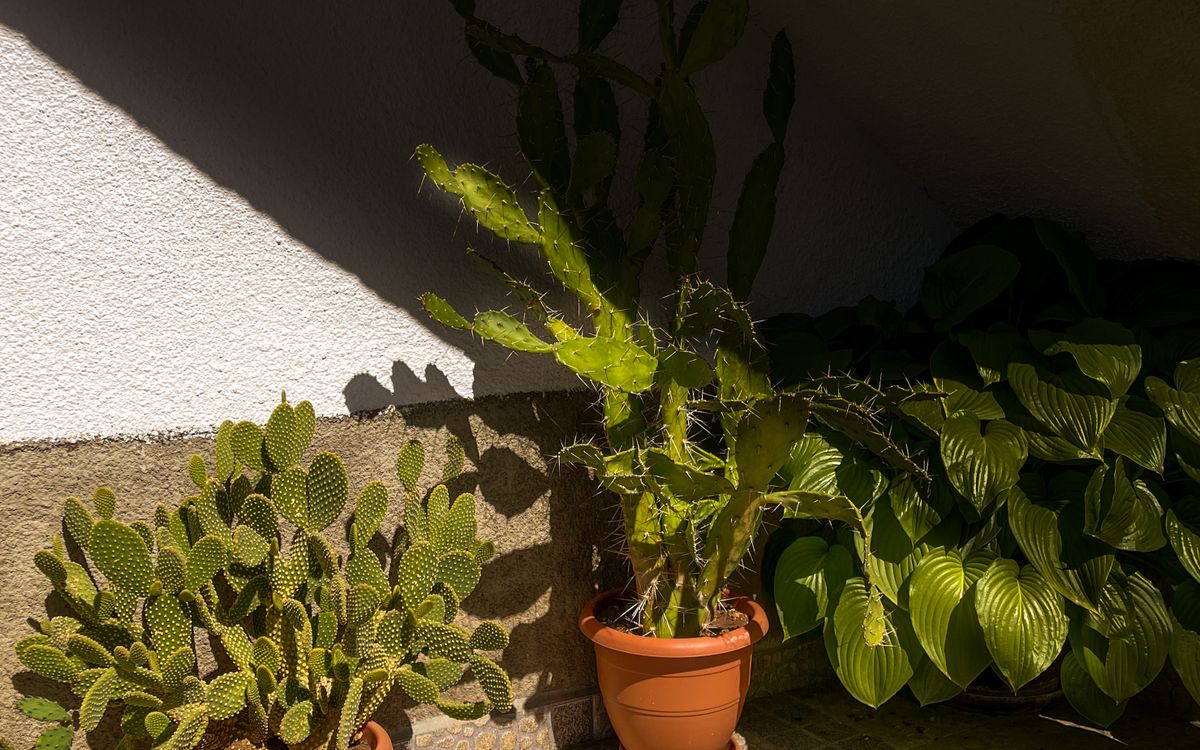
A courtyard under an open sky can be much brighter than a covered passage even if neither receives direct sun. Put a sheet of white paper in the proposed growing spot and look at the shadows around it at breakfast and again later. A sharp shadow means direct sun, filtered shifting shadows indicate light passing through foliage, and a vague shadow can mean nothing more than an open view of the sky. A deeply recessed entrance can have very little useful light despite bright paving nearby. Observe different areas of the space. A distance of two paving slabs may be enough to put one container in a useful patch of morning sun.
Think about the surfaces, too. Light reflects from a pale wall and may give an open corner a lift. A dark overhang can keep a rainstorm off an entire group of pots without admitting much light to the plants. Beneath a deciduous tree, the first leaves of spring may appear before shade fills in. Pick plants that suit the most demanding part of the growing season as well as the conditions on the day you buy them.
Let foliage carry the arrangement
Leaves can give you consistency through weeks with few flowers. Compare different shapes before you compare colors. The divided fronds of a fern look particularly fine beside the rounded leaves of a heuchera. A strip of arching Japanese forest grass, in climates where it thrives, can mark the edge of a broad planter. Tall upright leaves give good contrast in the background. A mound of low textured foliage makes the lip of a pot part of the scene. Try to see the plant at mature size. A fine young fern can become wide enough to hide the leaves of all its neighbors.
Try a few leaves at once against the backdrop. A dark purple heuchera may disappear in front of a dark wall unless you give it something pale on either side. Variegated or silver-marked leaves can read well from indoors, but their needs depend on species and cultivar. Arrange the pots asymmetrically if one side receives much less light. Repeating a foliage color across three containers can create a coherent look without giving all three containers the same planting.
Keep plants with similar root needs together
A loose design on paper can put anything next to anything. Roots tell a different story. A moisture-loving fern may wilt in the same gap between waterings that suits a plant prone to crown rot. Both may do well in shade, but separate pots allow you to use the mix and watering routine each needs. Place the tallest pot in back and set a smaller moisture-loving plant where you can lift it for a check. When making a mixed planting, consult plant labels for mature size, moisture needs, and hardiness. Give the slow-growing plant physical room to keep a leaf in the light.
Use a container mix formulated for potted plants and provide open drainage. Shady pots can dry slowly, particularly in cool weather, but a narrow pot full of thirsty roots may still dry rapidly. Fill a broad planter without pressing the mix into a dense layer. Keep crowns near their former height. If the surface settles after watering, add a little fresh mix around the plants without burying their bases. A planter with deep offsets in a sheltered spot may trap water underneath it. Test the drainage before attaching it permanently or filling it with heavy plants.
A shaded stoop with a little morning sun
A landing that gets one or two hours of gentle morning sun can display more color than its afternoon appearance suggests. Put a small hosta with pale green edging in a pot on the inner side of the landing, leaving the leaves away from regularly used steps. Give the hosta a pot broad enough to accommodate next year's crown. Place compact shade-tolerant annuals in a separate pot nearer the light. Begonias suited to part shade can provide that brighter pot during warm weather, with exact needs depending on the group and cultivar. Drain the container and avoid leaving tuberous varieties out through a frost if they are tender where you garden.
For a more permanent core, move the largest foliage pot to the brightest open side so it receives more sky. Use small individual containers to change the seasonal accent. A small plant can change the balance of the landing with far less disturbance than pulling up a rooted planting. The test for an entrance is how it behaves when the door opens while you carry something. Leave a deliberate gap between the largest pot and the most used side of the doorway.
A covered courtyard with bright reflected light
Imagine a sheltered brick courtyard with no direct sun in summer and little wind. For an appropriate temperate climate, a shade-tolerant fern beside a cluster of heucheras can fill a wide footprint without high stems. A plant with attractive foliage throughout the growing season is the most reliable foreground. Use modest groups and keep an open area around the pots so air can move. Then observe the leaves: clean color and sturdy stems show that the light is adequate, while repeated stretching toward the open side suggests looking for a brighter location.
In an area no rain reaches, watering is entirely under your control. Check near the walls after several dry days, including after a rainstorm. The empty saucer beside a damp courtyard may be your first clue that those pots got no rain at all. In a truly dark alcove, test a plant for a limited period before buying several matching specimens. Move plants into brighter shaded sites if new growth thins and turns pale. A plant display can look fresh on moving day and still provide too little light over the long term.
Make water checks short and repeatable
A pale, crusty top does not reveal what is happening at the bottom of a pot. Feel at the depth appropriate to the plant and compare the pot's weight if it is small enough to lift safely. Water thoroughly only when needed and drain excess. If you need to empty a hard-to-reach saucer, reconsider its placement before the plant grows larger. Pots grouped tight against a cool wall can need half the attention of a small trough that receives a short burst of direct afternoon light. Judge each in its own position.
After several cool days, drooping leaves with saturated mix call for a drainage check. The mix may simply be too wet for roots to function, especially if the pot has a plug or lower saucer you missed. Persistent moisture at the crown can cause rot. A drainage problem is easier to address before roots turn mushy or substantial foliage is lost. On the other hand, dry mix can pull away from the rim and accept water only along the edges. Use two or three slow pours with a pause between them and verify that the root ball has absorbed moisture.
Diagnose damage without redoing the whole planting
If hosta leaves have irregular holes that appear after damp nights, look for slugs and snails under pot rims and on nearby structures. Move the container slightly away from hiding places and check it again in the evening. If damage appears as a crisp tan patch only on the exposed side of a plant, determine whether direct light reaches that point from a new angle. This can happen when a neighboring branch has been pruned or a pot was turned after months in one orientation. Check for pests when new growth pales in a pattern or when leaves mark even in bright shade.
A single yellow old leaf is less urgent than repeated loss near the growing points. Trim plainly dead leaves, observe how the newest foliage is opening, and record only meaningful changes. Replace a cultivar that repeatedly fails in the same conditions with something better adapted to the site's light and climate. Space any replacement so the current plants continue to get their share of light.
Check what the wall does in winter
Spend a minute looking at the same containers from the garden door after a wet night. A cold shaded wall can delay drying on nearby leaves, while a sheltered wall under an eave can keep the roots unexpectedly dry. Move a pot far enough forward that you can inspect the floor and the old leaves behind it. If a stem brushes the wall every time you open the door, use a lower plant or reserve that spot for a pot that can stay clear.
Look through the next season
Some plants will disappear below ground during winter and return when their usual conditions resume. Others stay green in a mild climate and keep the group composed. Mark a dormant hosta so someone does not mistake the pot for an empty one. If you use tender plants, decide which will be moved to a frost-free spot and how you will reach that spot while the container is wet. Check local hardiness and remember that container roots are exposed to lower temperatures than many planted roots.
When spring arrives, an established grouping can leave space for another pot. Add a plant that brings a missing leaf shape or fits a newly available shaft of light. Let the plants that have done well explain more than a photograph of a larger garden. Their spacing and condition reveal what your exact spot can sustain.