Plant Care
How to Find and Stop Fungus Gnats in Houseplants
Identify the tiny flies around a plant, find the damp medium where they are breeding and break the cycle without overcorrecting your watering.
7 min read
Watch where the flies come from
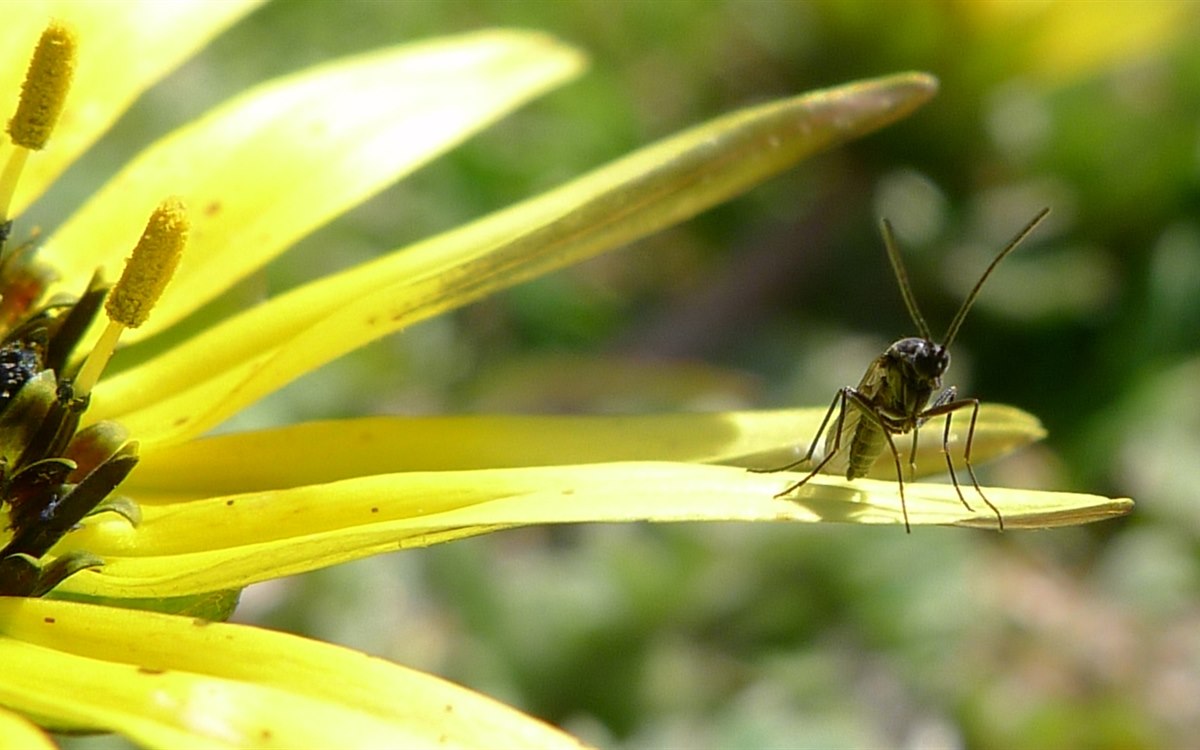
The first fly may be hovering near a lamp or crossing the page of a book. Look for the next one near the pots. Fungus gnats are small, dark flies that often run over the surface of moist potting mix and take short flights from it. Their slender bodies and long legs can resemble tiny mosquitoes, although they do not bite. Adult gnats may gather by lights or windows farther from the plant that produced them.
Fruit flies often spend more time around ripe fruit, fermenting liquids or food scraps. Drain flies have a different shape, with fuzzy wings that make them look like miniature moths. A small fly near a kitchen window could have come from another part of the room. Watch a suspected pot while you lift it slowly, and see where flies go when it is set down again. Nearby plant saucers, damp propagation trays and opened bags of potting mix can also hold suitable material.
If several flies are visible but none appear near soil, inspect other sources rather than treating every houseplant. Empty the compost caddy and check the drain and fruit bowl. Discard a damaged onion or similar food that has fallen out of sight. After a day or two, the same comparison can help you distinguish pests from different sources, including cases where two kinds of fly are present.
Put the monitoring card where a gnat will meet it
Set a small yellow sticky card just above the pot surface using a clean holder. Keep the adhesive away from leaves, children and pets. Write the pot’s name and the date on tape beside the card. If you use cards to compare pots, put them at comparable heights and check them at similar intervals. A card next to a very bright window can capture adults from several pots, so position it near the suspected medium when you want to find the source.
Inspect the card for small slender flies, then note how many new ones appear over a few days. An adult caught at an isolated plant does not necessarily prove that larvae are in that pot. A repeated concentration on low cards near one tray is more useful. Sticky cards also catch other insects and should be kept indoors, away from places where beneficial insects can become stuck.
Larvae are harder to see. In damp medium they can look like translucent narrow threads with black heads. If you need to confirm that a pot is breeding them, place a thin piece of raw potato against the surface and check its lower side after a day or two. Remove the piece after inspection. It is a short-term observation aid. Leaving food to break down in the pot adds more material for scavengers.
Identify what keeps the upper mix moist
Fungus gnats develop well where moisture persists around decaying plant matter, fungi, roots and potting materials. Look at the surface after an ordinary watering, then check again as the pot loses weight. A large plant might dry quickly in a bright window while a small cutting in fine mix stays wet under a lid. It only takes one spot that consistently stays damp to keep finding new adults around an otherwise fairly dry collection.
Clear away dead leaves on the surface and empty trays that contain standing drainage water. Check deep decorative pots and any bottom-watering basin that was left partly full. Look underneath plant shelves and pots for wet paper liners, spilled medium or a damp mat. A propagation tray that is seven or eight inches from the infested plant could be holding some of the developing insects.
If a pot has slowed its water use, check its shade, temperature and size. Fine, collapsed mix can also dry unevenly. The surface may remain moist after a series of small pours even though other parts of the root zone are too dry. A careful complete watering followed by draining and an appropriate period between waterings can behave quite differently.
Change the watering without drying the wrong plants
Allow the upper layer of mix to dry as far as the species can tolerate between waterings. In a drought-tolerant plant, the pot may be ready for a considerably longer interval. A fern or seedling can need even moisture lower down. Do not parch those roots to reach a pest-control goal. Empty reservoirs and provide better circulation where appropriate. A small bottom watering can temporarily keep the surface drier in some setups, provided you drain the container afterward and still check the root zone.
Water by what the pot needs. Check a little below the surface, lift it to assess weight and compare its condition with other recent days. If it routinely stays wet for much longer than expected, examine the drain and the mix before changing the plant’s normal location. A poorly draining pot in a bright site may still need a different container, while a draining pot in winter shade may simply use less water.
Fresh bags and saved medium deserve a look, too. Close opened bags and store them where rain or runoff cannot reach. Avoid saving wet mix in a bucket under the bench. If an older pot also shows root damage or compacted media, repotting may make sense on both counts. An otherwise healthy plant in sound mix can often be managed without disturbing all its roots.
Target larvae when the breeding source persists
Sticky cards catch some adults. The larvae and pupae in a pot remain there, which is why the number of flies may continue to rise and fall after the first card is installed. Keep monitoring and correcting moisture while you look for the next generation of adults. Counts over several successive checks provide a better picture than the total on one old card.
If larvae are confirmed and a susceptible plant must stay moist, a registered larval treatment may be appropriate. In some locations, products containing the biological ingredient Bti are labeled for fungus gnat larvae in growing media. Read the label before applying any product. It should cover the target pest, indoor growing media and the type of plant you intend to treat. A product sold for standing water may have different approved uses. Follow the label for application, frequency and precautions. Check separately for herbs or other crops you intend to eat.
Certain products containing beneficial nematodes are another possible option. Follow storage and use directions and pay attention to the conditions the product calls for. Confirm the breeding source first. Applying a treatment throughout the whole collection has little value if a bag on the floor is where the flies are developing.
Take particular care around seedlings
Adults on an established collection are usually a nuisance, but large larval populations can damage young roots. Seedling cells offer abundant moisture and little room for roots to compensate. Inspect the understory, trays and plugs separately. If you choose to use a sticky card near seedlings, place it where their first leaves cannot grow into the adhesive.
Improve light and airflow so the growing mix can cycle through suitable moisture levels. Drain any tray used for bottom watering. Inspect trays and labels for wet debris after thinning. If a young seedling falls over or darkens where it meets the mix, also consider damping off and other problems. One adult fly does not establish a cause for every affected seedling.
Keep uninfected trays separate if you can. Use clean cell trays and fresh material for the next sowing. Move seedlings to a pot of their own at the stage their crop can handle, and avoid transferring old medium from an affected tray to unrelated containers. A short log of when each set was sown helps you compare the reaction of delicate seedlings with that of older plants.
Track the decline before removing the cards
Replace a crowded or dusty card so it can still show new arrivals. Date the replacement and put it in the same place. Keeping a brief count every few days makes lingering activity easier to see. A fall from repeated catches to occasional ones suggests that the breeding conditions are improving, although you can still find adults that came from pupae already present when you changed the watering.
If a whole week of changes leaves the counts unchanged, look for a missed source. Compare the largest catches by position. Check recently watered trays, wet moss on the top of a pot, saucers hidden inside planters and bags of damp mix. If you have ruled out those places, recheck the fly’s identity. The work becomes simpler once you are watching the right insect and the right pot.
When catches stay low and you see little fresh activity, remove the cards and continue watering by the condition of each plant. Keep an eye on newly bought plants or long-covered seed trays for the next few weeks. Those are the places where one quiet change in moisture or airflow is most likely to create another patch of suitable habitat.
Consider one last check at the point you normally water, when moving a pot can reveal flies resting under the rim. Keep a single labeled monitoring card by the shelf for another week if the original source was hard to identify. A few consistent observations will tell you more than leaving cards in every pot indefinitely.